
Evaplant® - Wastewater treatment, without liquid discharge
A patented willow evapotranspiration technology, for industrial and landfill sites.
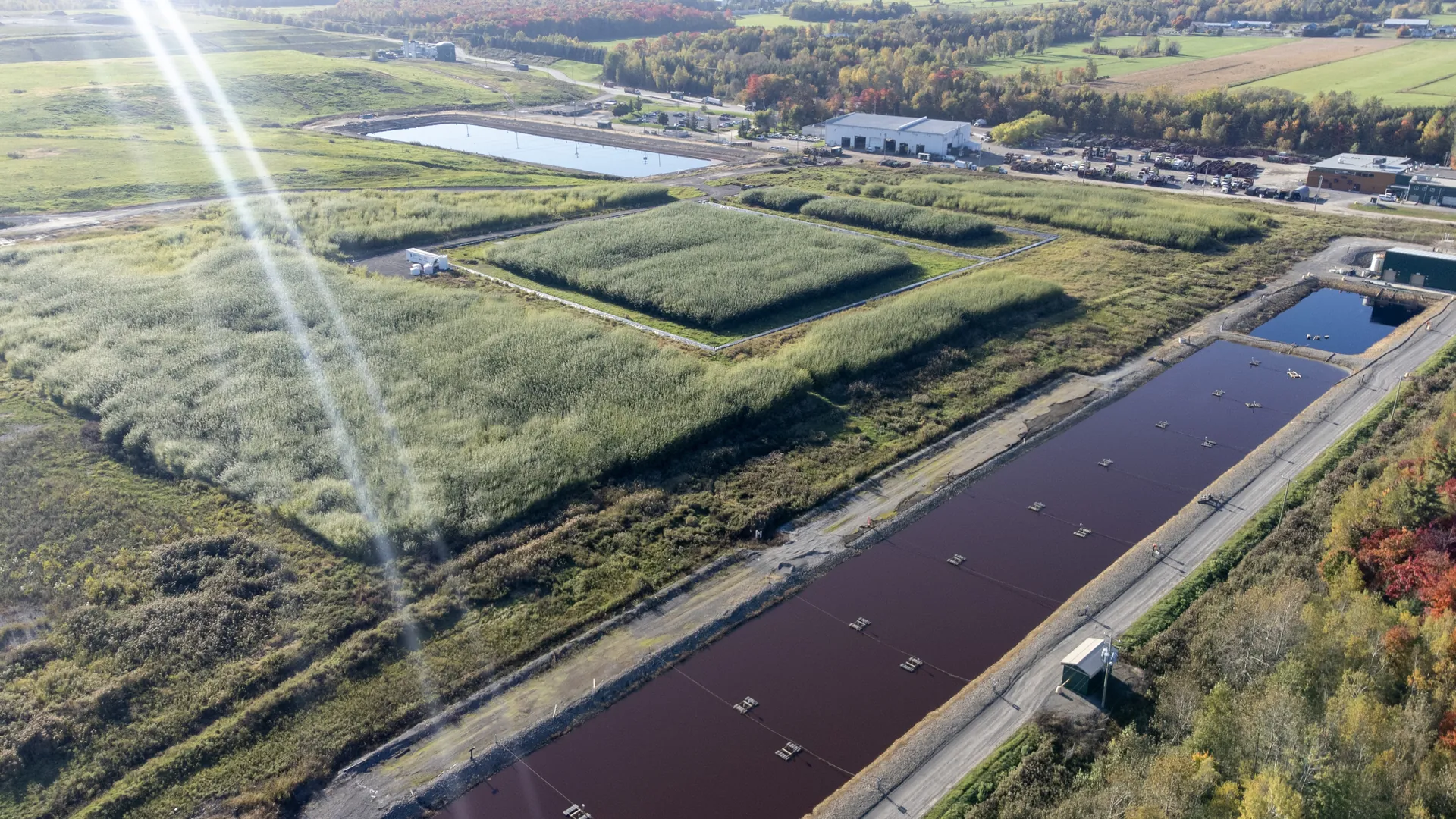
The challenge
Landfill sites and industrial operations generate large volumes of wastewater (leachate, process water, and impacted water) that are complex, costly, and energy-intensive to manage.
To manage this water properly, operators face three recurring challenges:
- 01 Treatment capacity reached (existing infrastructure is saturated and can no longer absorb generated volumes).
- 02 Environmental discharge capacity reached (the receiving environment can no longer absorb additional volumes).
- 03 No contingency solution (during rain events or failures, there is no remaining operating margin).
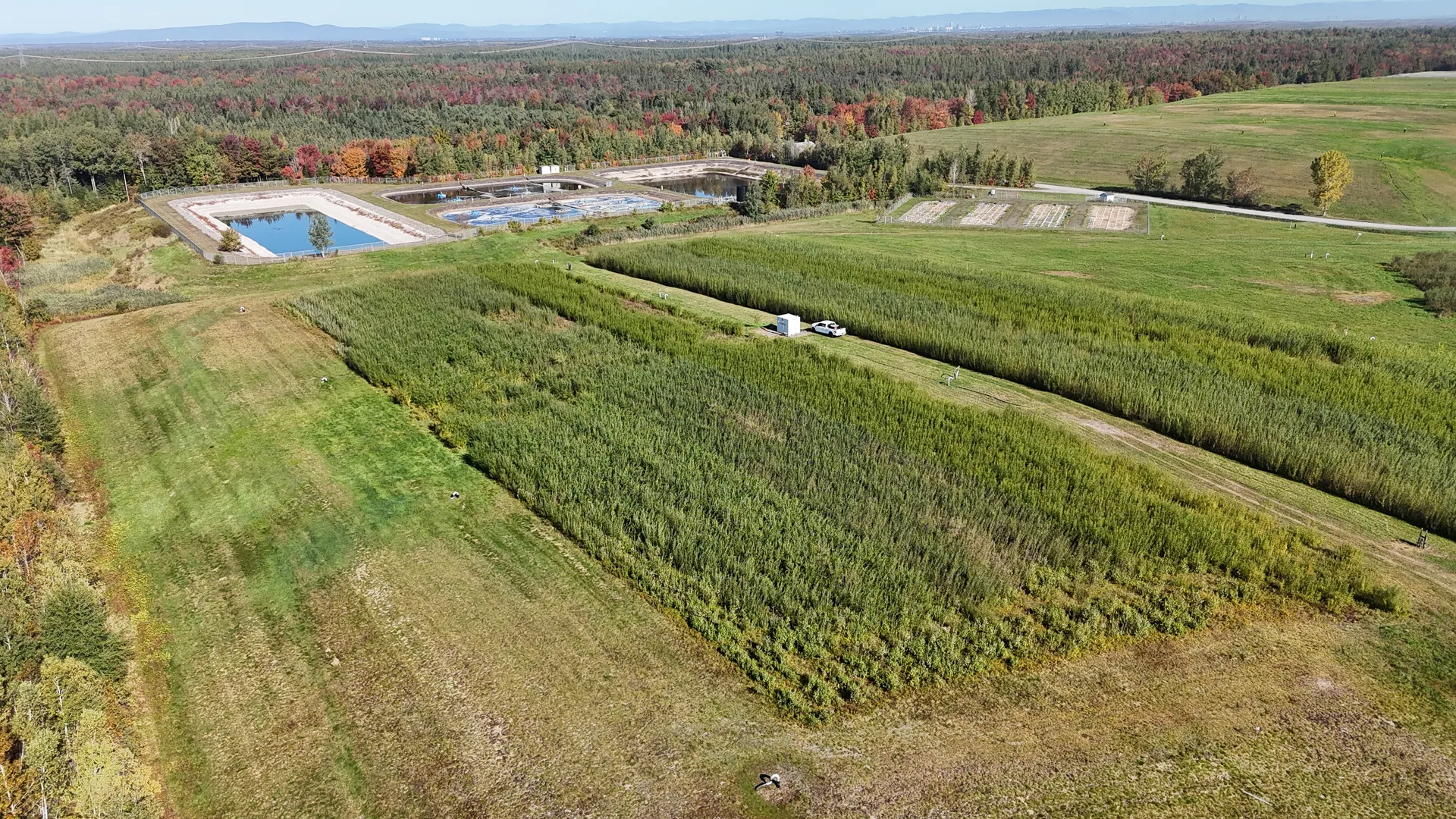
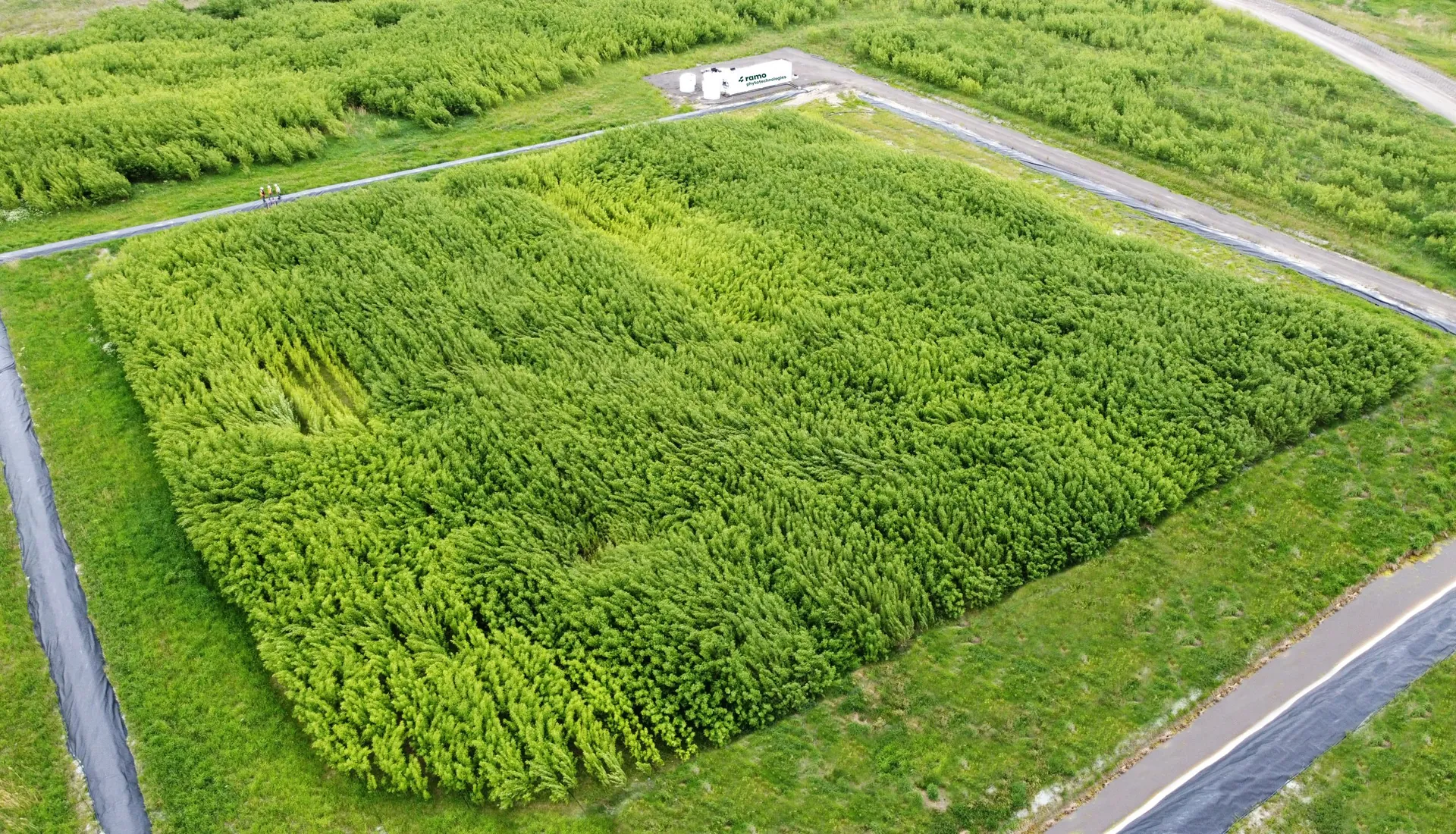

Evaplant® technology
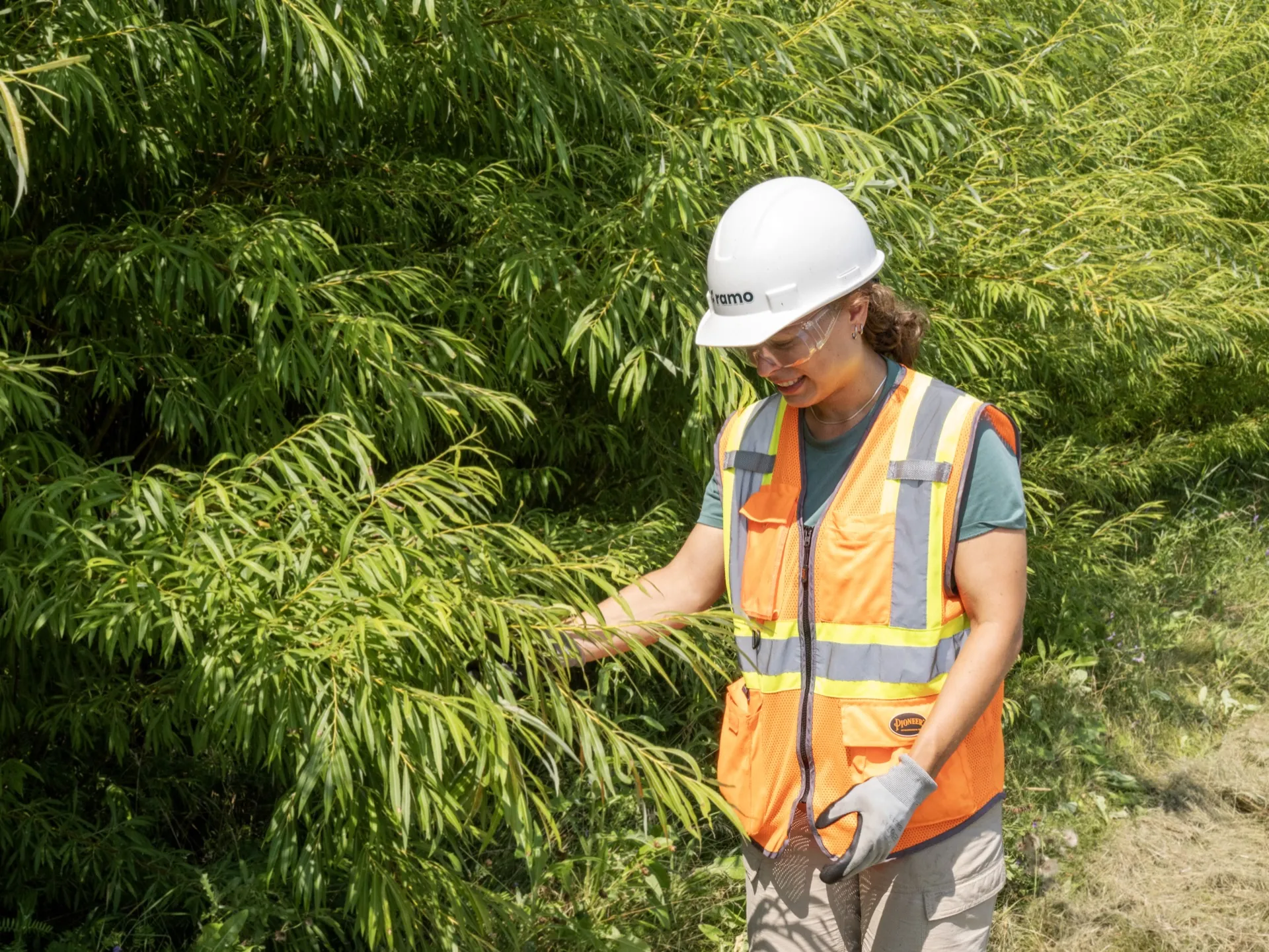
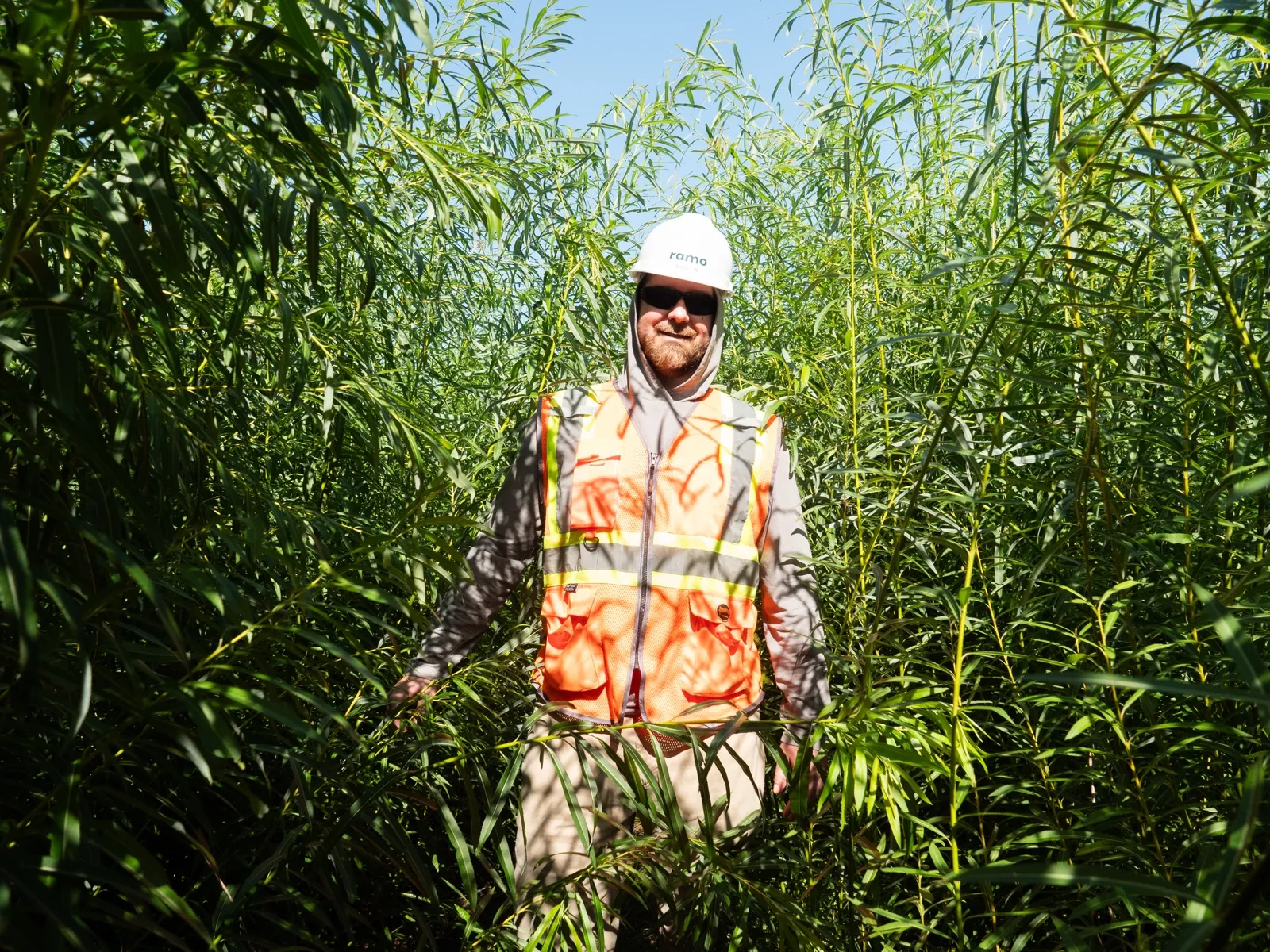
Evaplant® is a patented wastewater management technology based on the evapotranspiration capacity of fast-growing willow plantations.
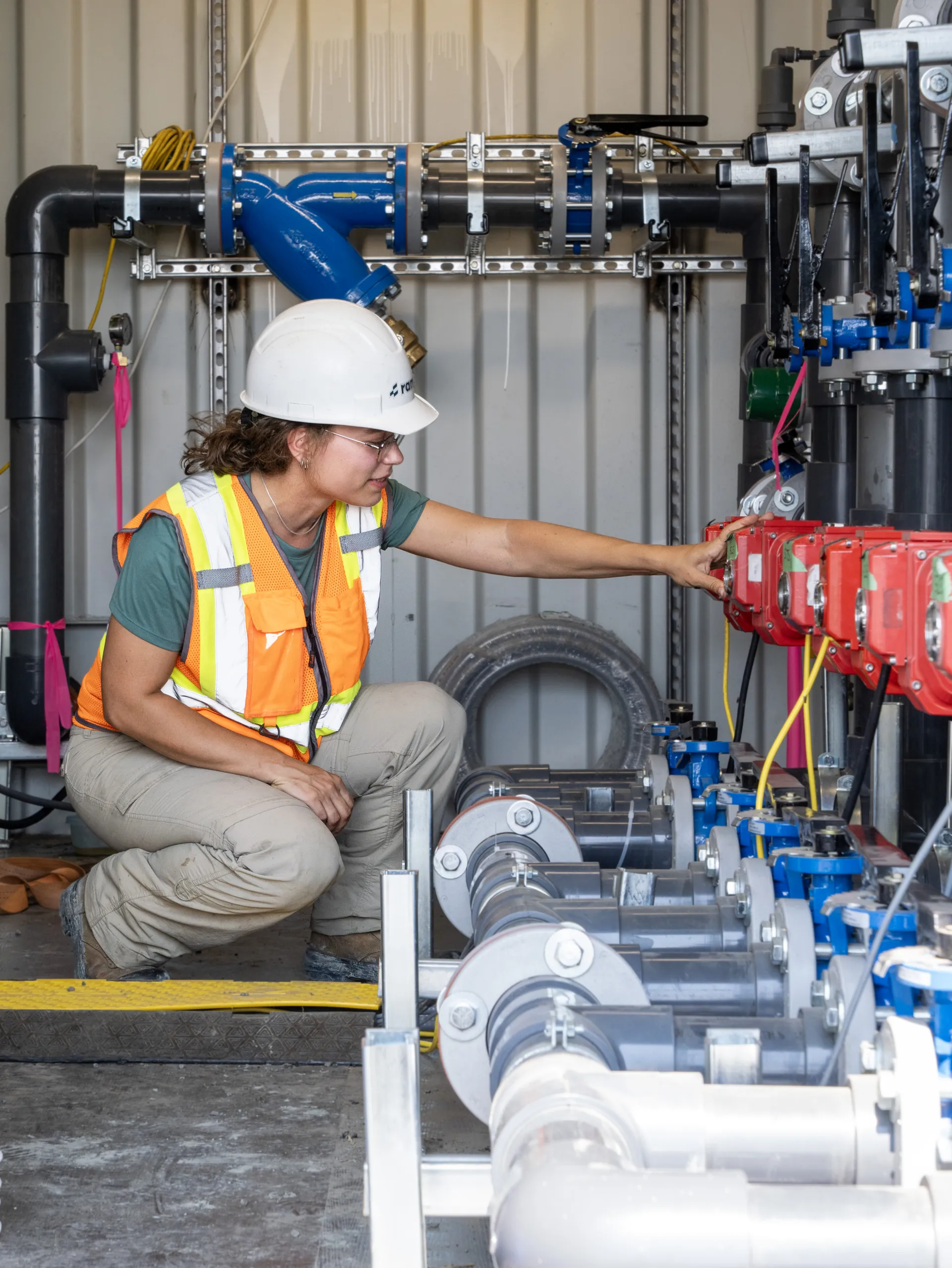
Water is applied through precision irrigation in a system controlled in real time using soil sensors, weather data, and water-management controls. The willows absorb the water and release it into the atmosphere, reducing the volumes that need to be managed.
The system is designed to keep water flows within the root zone, preventing off-site leaching or discharge. At the same time, the soil and plants help transform, absorb, or retain many contaminants, including certain per- and polyfluoroalkyl substances (PFAS) whose management is being scientifically validated.
Compatible with former landfill cells. In this type of setting, willow roots do not reach the cover membrane; root development remains confined to the useful near-surface zone. This behaviour is documented and proven on sites we have operated for several years.
Explore further Up to 22.7 mm/day of evapotranspiration (the science behind our technology)Benefits
Main benefitsTreatment capacity freed up
Up to 5,000 m³/ha/year evapotranspired, freeing up capacity in existing collection, storage, and treatment infrastructure.
Valorizing soils and fertilizing residuals
Establishing the planting valorizes soils and fertilizing residuals, while meeting the site's amendment needs.
Zero liquid discharge off site
Evaplant® manages effluents with no off-site discharge, an advantage when discharge authorizations to the receiving environment are limited.
Confinement of contaminants (PFAS)
Contaminants, including PFAS, are confined on site, retained by the soil and the willows rather than released to the receiving environment.
Strong social acceptance
A visible, natural and environmental solution, appreciated by the surrounding population.
Site greening
Mature vegetated cover that transforms the appearance of the site and sequesters up to 36 t CO₂ eq./ha/year.
Phragmites control
The soil inputs required for the planting help control invasive phragmites. Less phragmites means fewer dry reeds that can catch fire in winter.
Evaplant® project steps
Preliminary and detailed engineering
- Physical and chemical characterization of site soil
- Effluent characterization
- Treatability testing
- Authorization request
Willow planting
- Preparation of the establishment zone
- Mechanized willow planting
- Planting establishment monitoring and scouting
Wastewater irrigation system installation
- Installation of the irrigation system and pumping station
- Installation of instrumentation for environmental monitoring
Technical and environmental process monitoring
- Process operation and maintenance
- Environmental process monitoring
- Measurement of willow agronomic and chemical properties
- Seasonal biomass-yield monitoring
Video testimonial
Discover the deployment of Evaplant® at WM's engineered landfill in Sainte-Sophie.
Evaplant® in the field
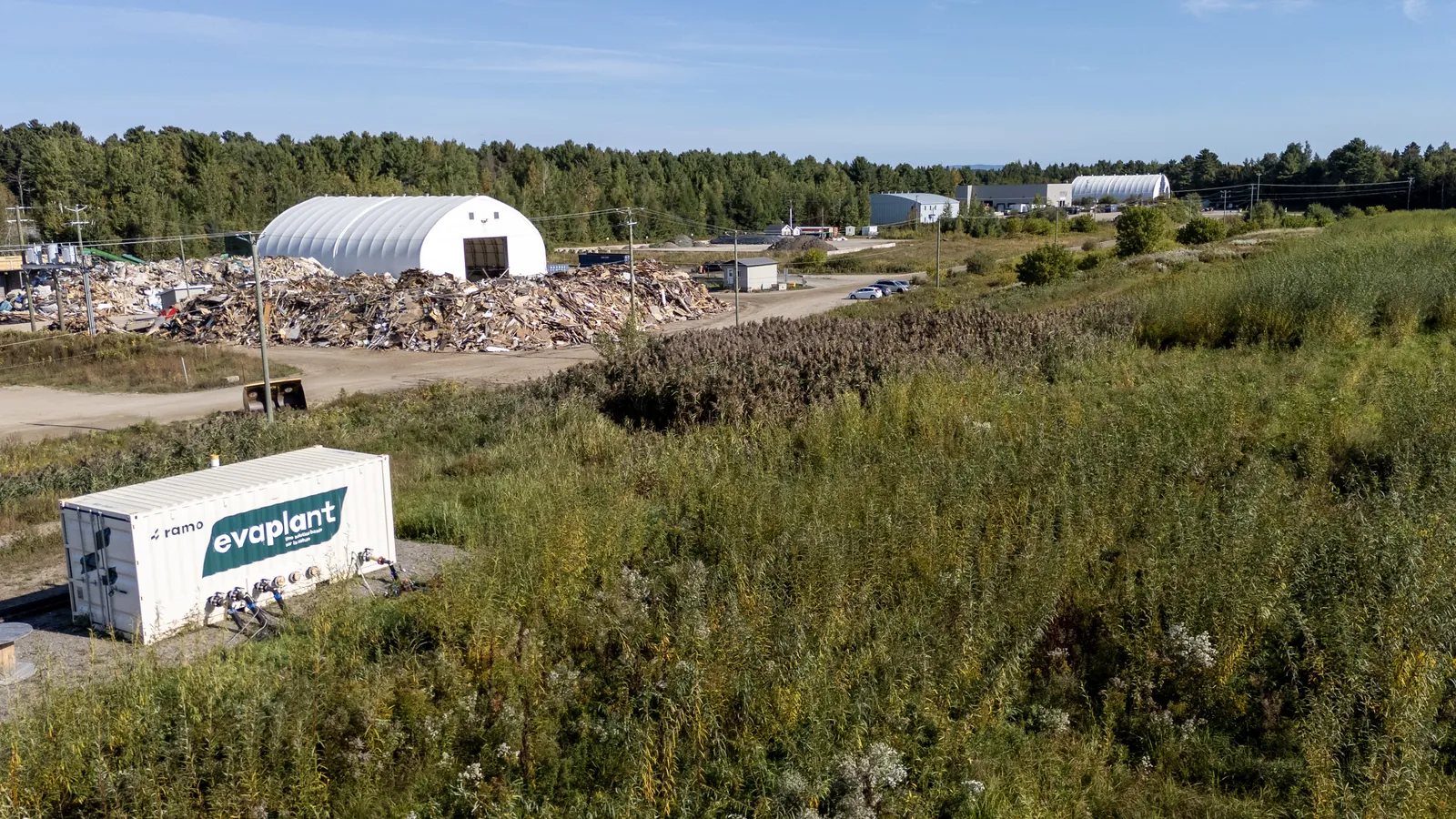
Treating water at an environmental complex, without discharge
96,000 Evaplant® willows on 6 ha, repurposing a former landfill site and treating up to ~20,000 m³/year of water, without discharge.
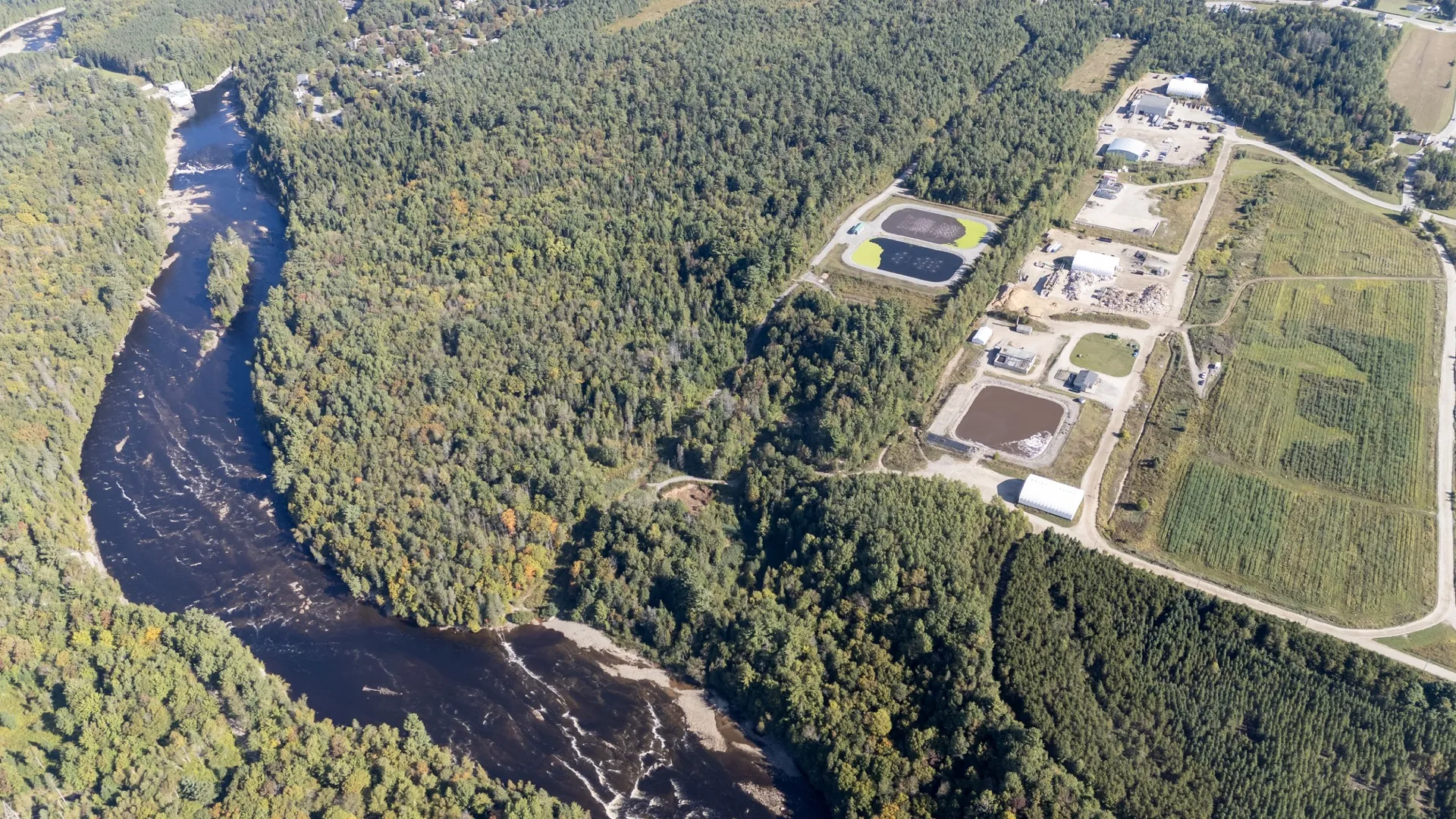
Evaplant® (Saint-Nicéphore complex)
Integrated management combining Evaplant® and Evacap™ for maximum performance.
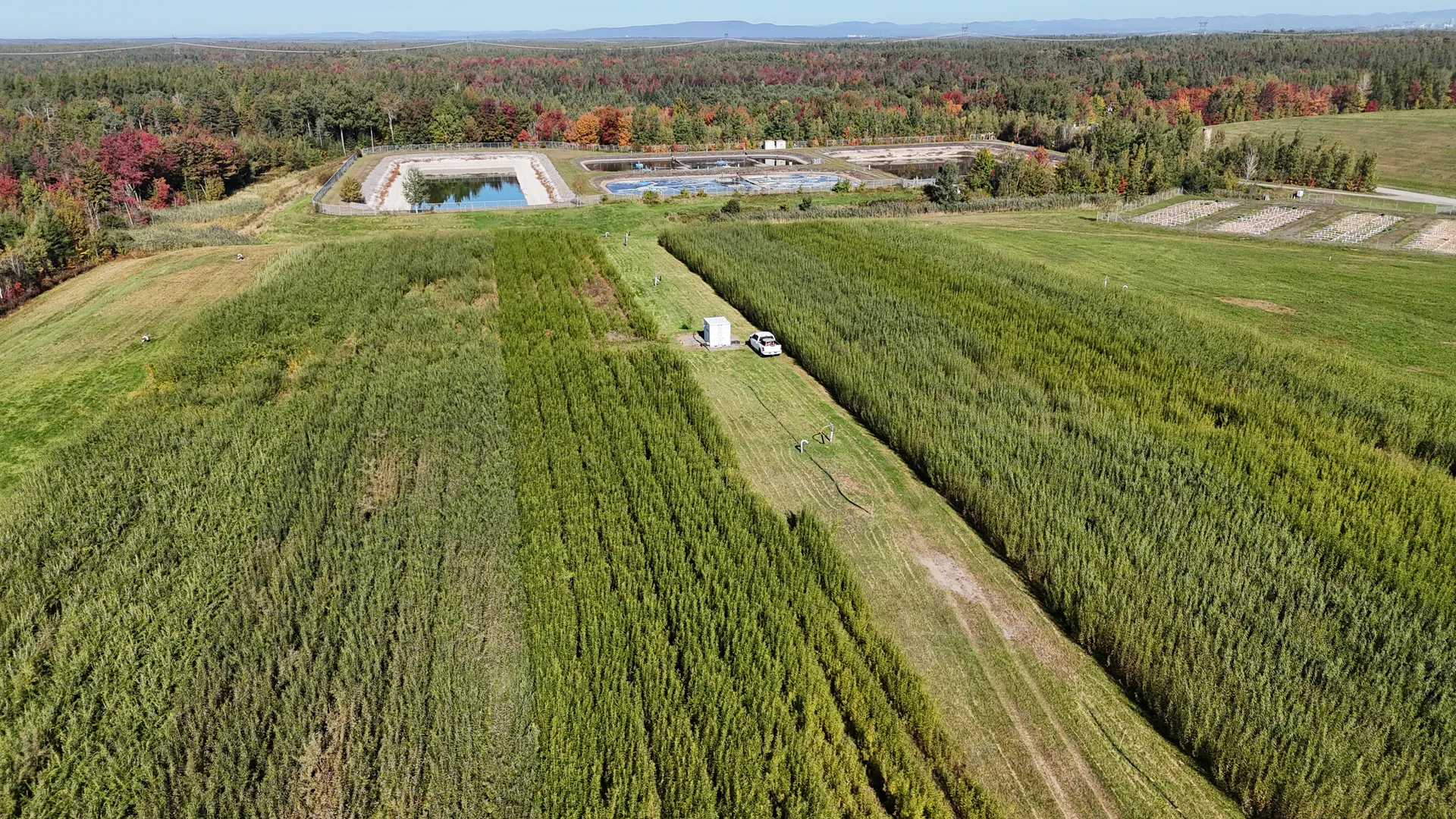
Evaplant® (Saint-Lambert-de-Lauzon engineered landfill)
1.7 ha of Evaplant® on a former cell: ~5,000 m³ of leachate treated without discharge and ~117 t CO₂ eq. captured.
Evaplant® (Frequently asked questions)
Does Evaplant® treat wastewater?
No. Evaplant® is not a conventional treatment process. The system is first designed to treat water without discharge, through evapotranspiration, which sharply reduces downstream treatment needs. Soil and willows then contribute to the transformation, absorption, or retention of certain contaminants.
What types of water can be managed?
Mainly wastewater: landfill leachate, industrial water, and process water. Compatibility depends on concentrations and must be validated during engineering.
How does Evaplant® achieve zero liquid discharge?
The system precisely controls water inputs using soil and climate sensors to keep flows in the root zone. Water is evapotranspired without off-site migration when operating conditions are met.
What is the typical performance?
Under standard conditions, treatment capacity generally reaches up to 5,000 m³/ha/year, depending on climate, soil, and effluent characteristics.
Does Evaplant® work in winter?
No. Evapotranspiration is active during the growing season. In winter, volumes must be stored or managed through a complementary system such as Evacap™.
Can willow roots damage the membrane of a former landfill cell?
No. When Evaplant® is deployed on a former cell, willow roots do not reach the membrane and pose no risk to the integrity of the cover. Precision irrigation and substrate design keep water flows and root development in the useful near-surface zone. This behaviour is documented and proven on sites we have operated for several years.
What role can Evaplant® play with PFAS?
Evaplant® helps contain forever chemicals (PFAS) on site. Willows can bioaccumulate these contaminants instead of releasing them into the receiving environment. Research is currently underway with IRBV to better characterize the mechanisms and performance of the system.
Have a question?
Contact us.
Our team is available to discuss your needs and recommend the right solution.