
Evacap™: evapotranspirative cover for stormwater
Less wastewater generated, so less wastewater to treat. A passive solution for industrial and landfill sites.
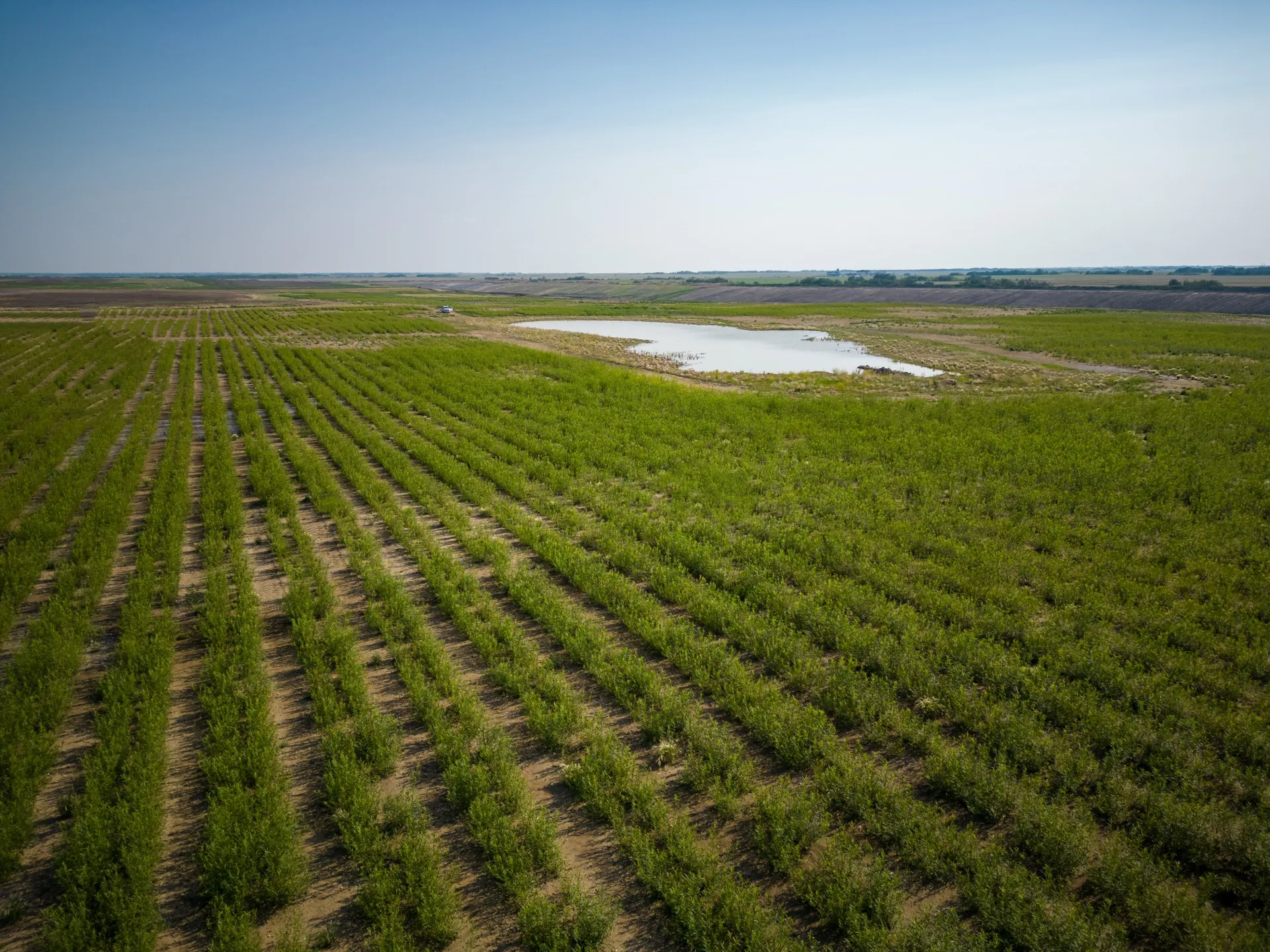
The challenge
Industrial sites and landfills generate significant volumes of stormwater and contact water.
This water must be collected, stored, and treated, which drives up costs and creates a constant dependence on management infrastructure. In addition, older storage or landfill facilities are not always fully sealed and continue to generate wastewater requiring treatment even after they are no longer in operation. Moreover, the increase in precipitation driven by climate change will place growing pressure on water treatment infrastructure, making it all the more important to reduce volumes at the source.
The greater the volume generated, the higher the operational complexity and environmental risk.
The Evacap™ technology
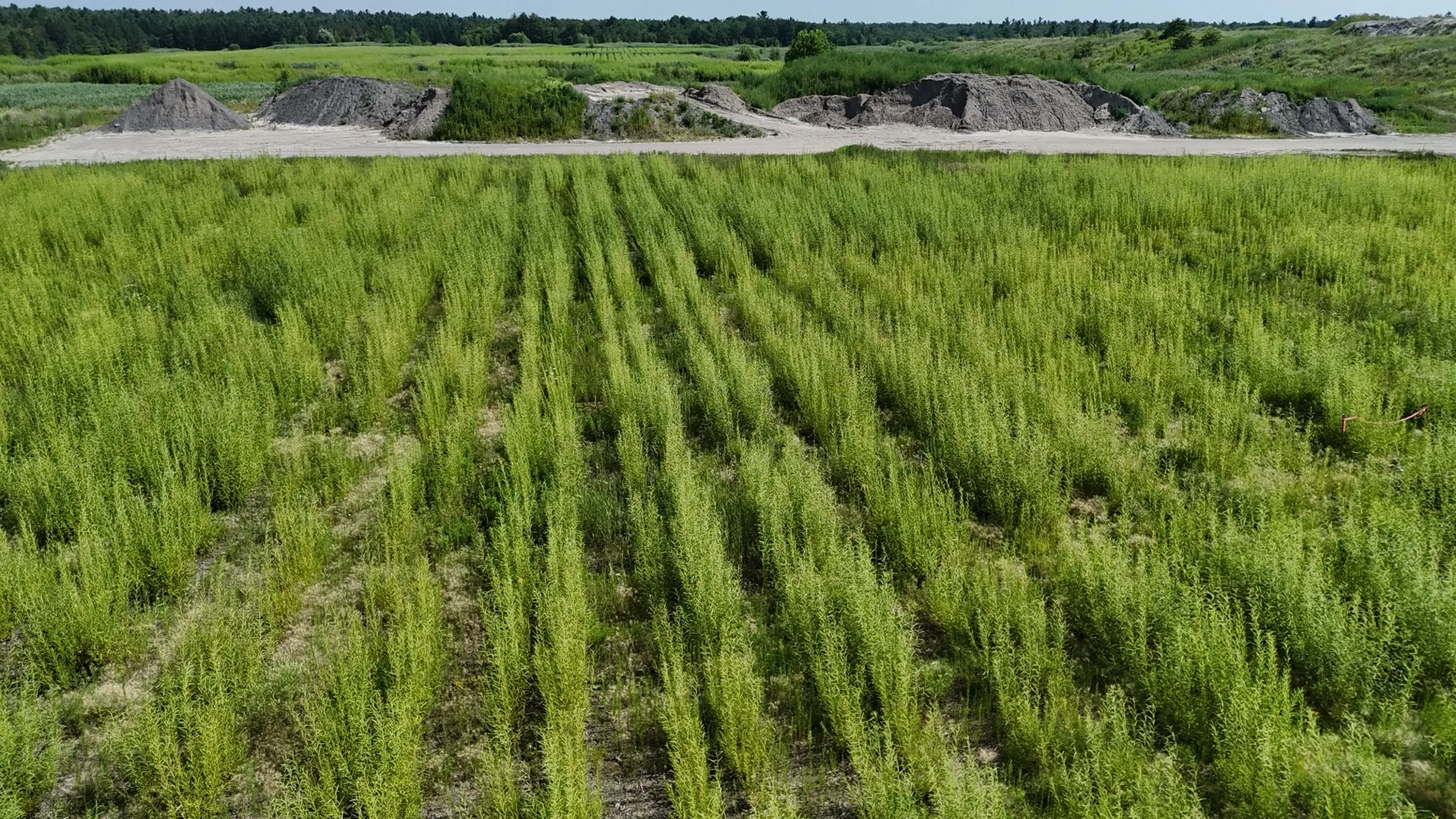
Evacap™ is an evapotranspirative cover system designed to reduce the volumes of water generated directly at the source.
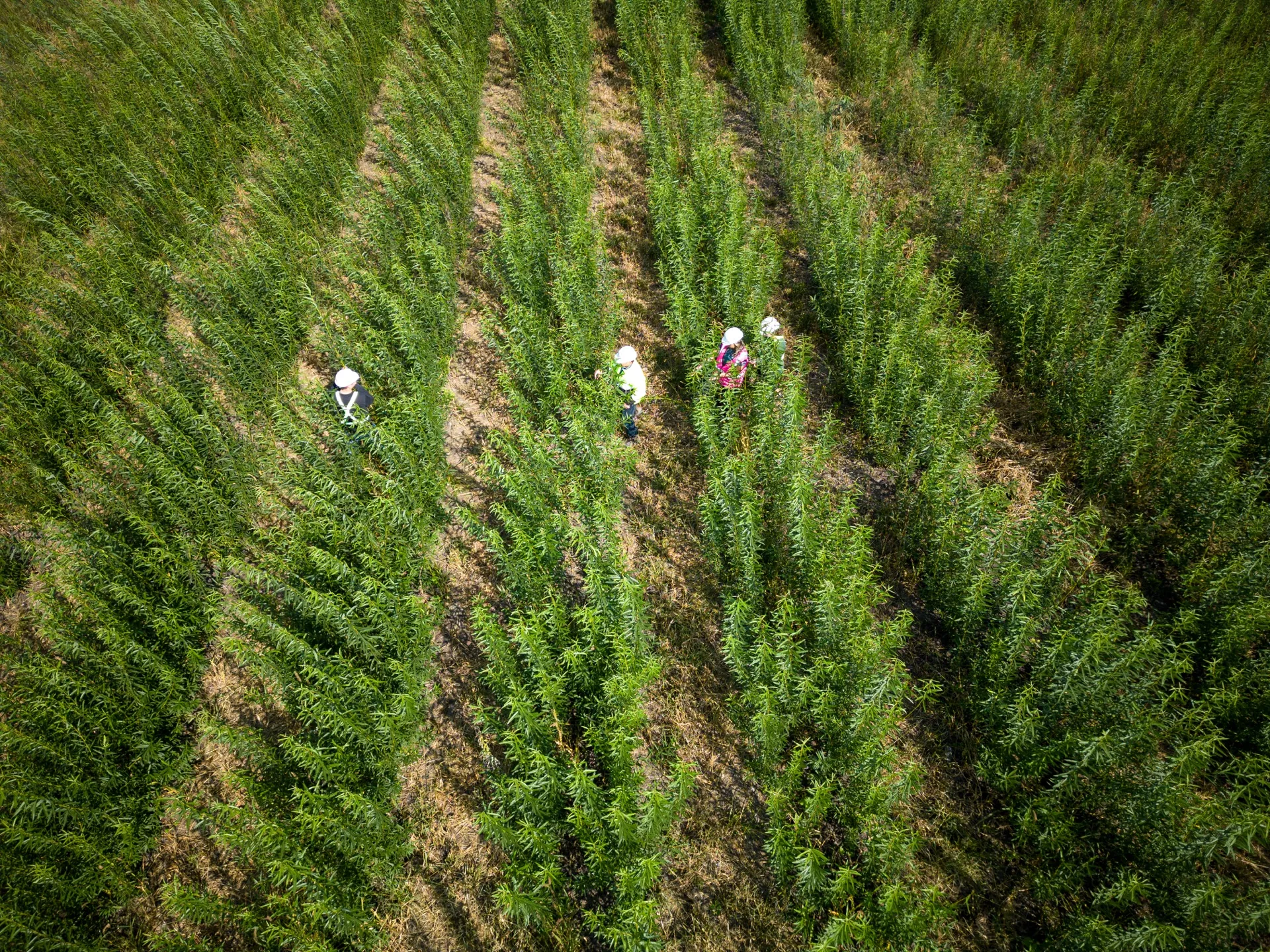
The system combines an optimized soil profile with a planting of willows with high transpiration capacity. Rainwater is intercepted, temporarily retained, then returned to the atmosphere through evaporation and transpiration.
Unlike conventional approaches based on collection and treatment, Evacap™ acts upstream, limiting the very formation of the volumes to be managed. The system operates passively, with no energy input, and integrates with existing infrastructure.
Explore further Why is the willow a biological pump?The benefits
Main benefitsReducing the water volumes to be managed
Up to 75 to 95% of seasonal precipitation can be returned to the atmosphere through willow evapotranspiration.
Valorizing fertilizing residuals and soils
Establishing the cover requires inputs of soil and fertilizing residuals: an economic and operational value creator.
Reducing leachate and wastewater
Less water reaches the residual materials or the at-risk soils, which reduces the volumes to collect, pump, store, and treat.
Passive, energy-free solution
No pumping, no chemical inputs, no continuous operation: the vegetation cover works on its own.
Greening and carbon capture
A vegetated infrastructure that improves the site’s visual integration while sequestering up to 20 t CO₂ eq/ha/year.
Strong social acceptance
A natural, visible solution, generally well received by communities and stakeholders.
Return of biodiversity
The willow cover recreates a living environment: biodiversity returns and habitats form on a site that was previously mineral.
Biomass production
Successive willow harvests produce high-quality ramial chipped wood (RCW) mulch.
The steps of an Evacap™ project
Preliminary and detailed engineering
- Physical and chemical characterization of the site's soil
- Evapotranspirative cover design, water balance review, and performance assessment
- Authorization application
Cover installation and willow planting
- Preparation of the establishment area (e.g., adding soil, amendments, tilling)
- Mechanized planting of the willows
- Installation of instrumentation for environmental monitoring
Monitoring
- Monitoring of the planting's establishment and scouting
- Seasonal monitoring of cover growth and hydraulic performance
Evacap™ in the field


Evacap™ (Frequently asked questions)
Does Evacap™ treat stormwater?
No. Evacap™ does not treat water. The system is designed to reduce the volumes generated at the source, by intercepting and evapotranspiring precipitation before it becomes water that has to be managed.
What is the difference between Evacap™ and Evaplant®?
Evacap™ acts upstream by reducing the volumes generated (infiltration water, runoff). Evaplant® acts downstream by treating the water that has already been collected, without discharge. The two technologies are complementary.
Can Evacap™ work on its own?
Yes. Evacap™ can be deployed as a standalone solution to reduce incoming volumes in water management systems. It is often combined with Evaplant® to maximize overall performance.
How does Evacap™ work?
The system combines three mechanisms: interception of precipitation by a vegetation cover, temporary storage in an engineered substrate, and evapotranspiration by the willows. It is a passive system, with no energy or chemicals.
What performance can be expected?
The reduction depends on the climate, the design, and the site, but it can achieve significant reductions in the volumes generated (directly lowering the need for treatment and transport).
Does Evacap™ work year-round?
The system acts as soon as there is precipitation, but its maximum efficiency is reached during the growing season. In winter, it mainly helps manage storage and limit incoming volumes.
Have a question?
Contact us.
Our team is available to discuss your needs and recommend the right solution.
Updated