
Revegetation substrate
Bring depleted soil back to life with a revegetation substrate based on ramial chipped wood.
The challenge
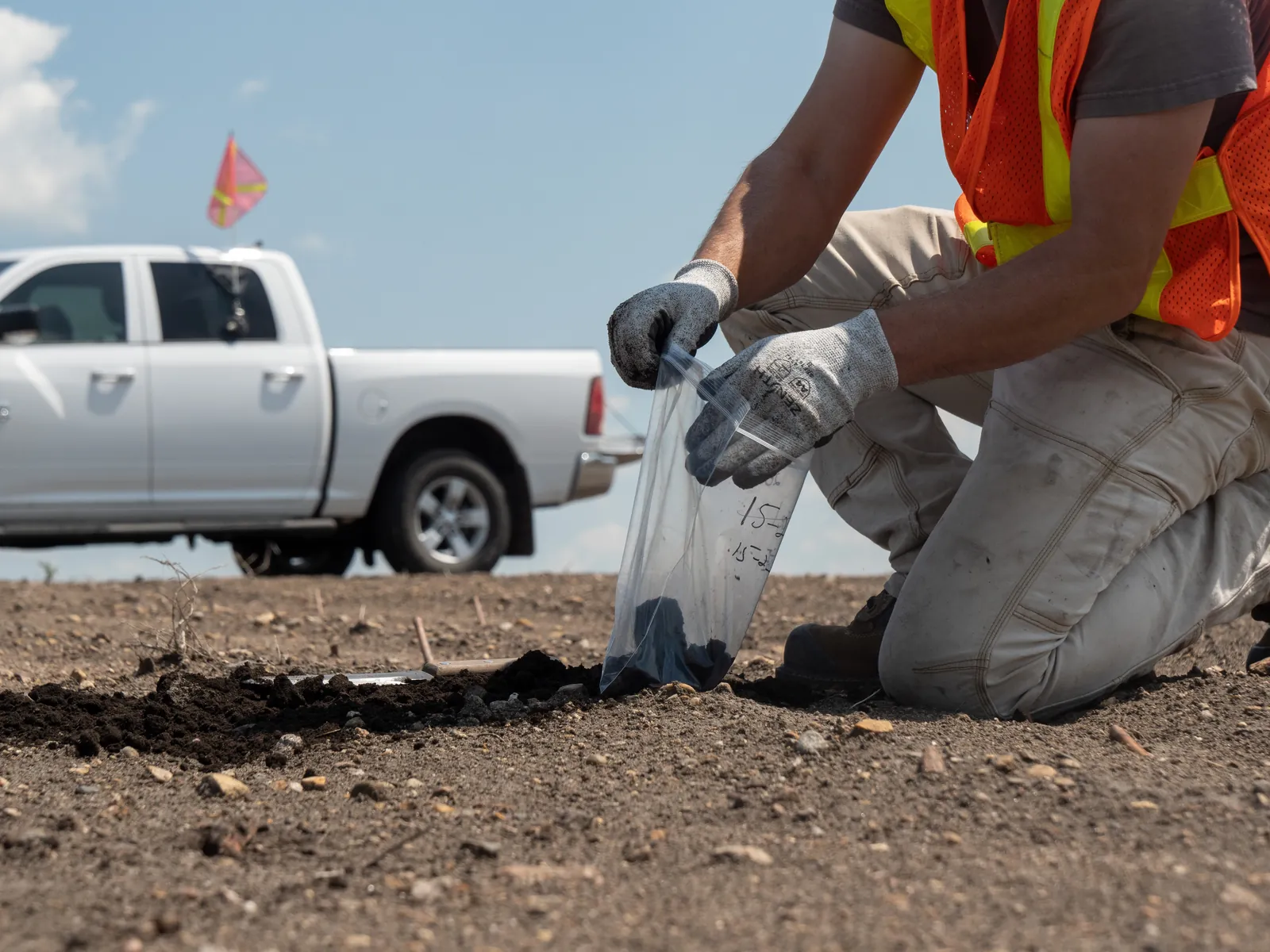
Mining sites, degraded sites and depleted farmland face a critical shortage of soil and organic matter. Topsoil volumes are limited, borrow pits are constrained, and importing materials drives up costs.
Without organic inputs, these surfaces remain barren and unable to sustain lasting vegetation cover.

The solution
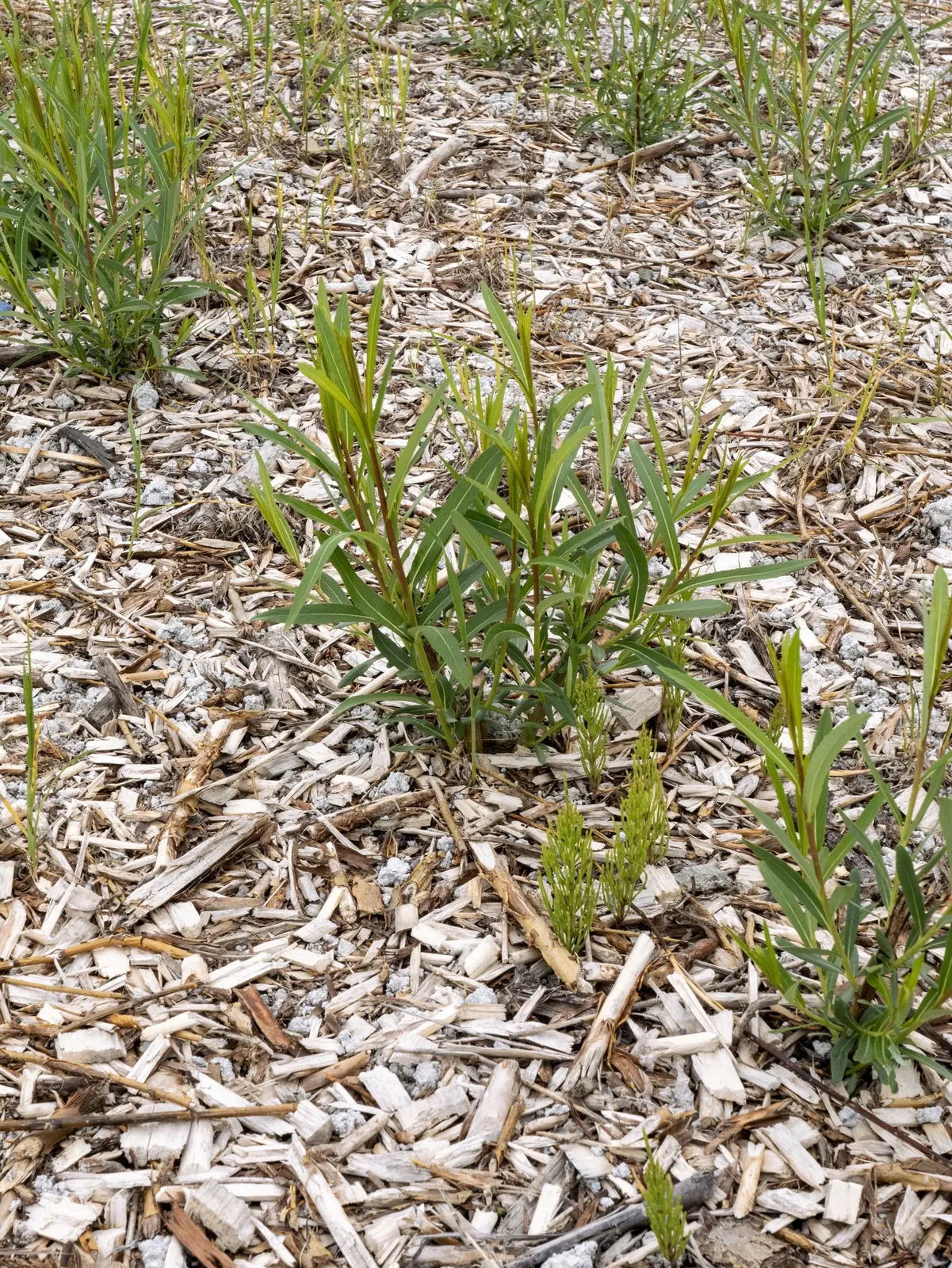
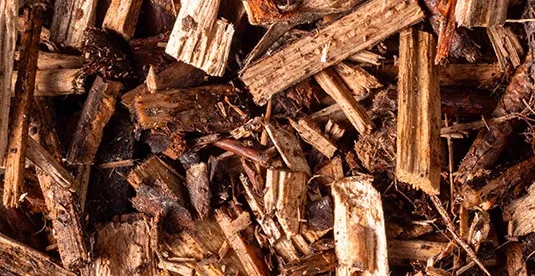
Ramo develops revegetation substrates based on ramial chipped wood (RCW), designed to recreate functional soil.
The substrate is formulated by combining:
- inputs available on site (overburden, existing soils)
- organic inputs (RCW, fertilizing residuals, amendments)
Each recipe is tailored to site conditions and validated against the target performance.
Explore further What ramial chipped wood does to degraded soilThe stages of a project
Substrate reconstruction
Creating a growth horizon from tailored mixes (soils + organic matter).
Adding organic matter
Using RCW to fill the organic deficit and improve substrate performance.
Adapting to available inputs
Optimizing on-site materials to limit imports.
Supporting revegetation
Creating favourable conditions for establishing willows and other plants.
Applications
Mining sites
Rebuilding soils on waste rock piles, tailings ponds and degraded areas.
Industrial sites
Rehabilitating disturbed surfaces.
Landfill sites
Creating substrates for vegetated covers.
Depleted farmland
Rebuilding organic matter and structure in depleted cultivated soils.
Marginal land
Improving poor or unproductive soils.
What makes the difference
- Directly addresses the organic matter deficit at mining sites
- A soil-reconstruction approach, not just amendment
- Uses RCW as a key performance input
- A local source of uniform, renewable substrate
- Steady, predictable supply
- Phased supply aligned with restoration stages
- Reduced use of borrow pits
Revegetation substrate (Frequently asked questions)
Does the substrate replace topsoil?
It greatly reduces reliance on topsoil by recreating a functional growth horizon.
How is it formulated?
From inputs available on site (soils, overburden) and organic inputs such as RCW, following tailored recipes.
Is the supply reliable?
Yes. The substrate comes from a local, uniform and renewable source, with steady supply capacity.
Can it be integrated into a phased restoration?
Yes. Supply can be planned according to the site's progress phases.
Have a question?
Contact us.
Our team is available to discuss your needs and recommend the right solution.
Updated