
Context
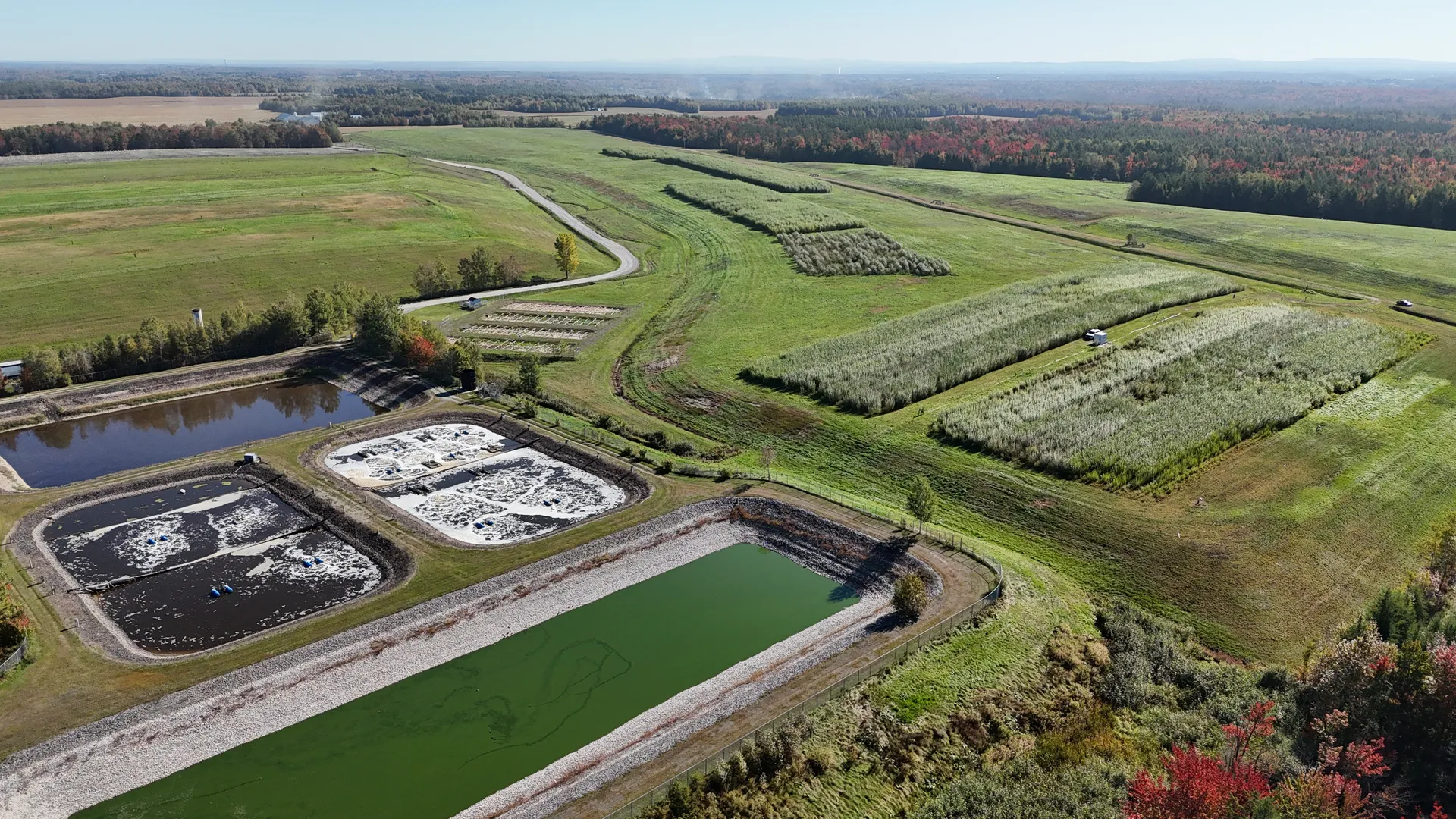
The Saint-Lambert-de-Lauzon landfill generates partially treated leachate, directed to a conventional treatment stream before discharge to the receiving environment.
This approach, although compliant, involves large volumes to manage and limits the site's operational flexibility. The goal of the project was to treat these volumes without discharge to the environment.
The solution implemented
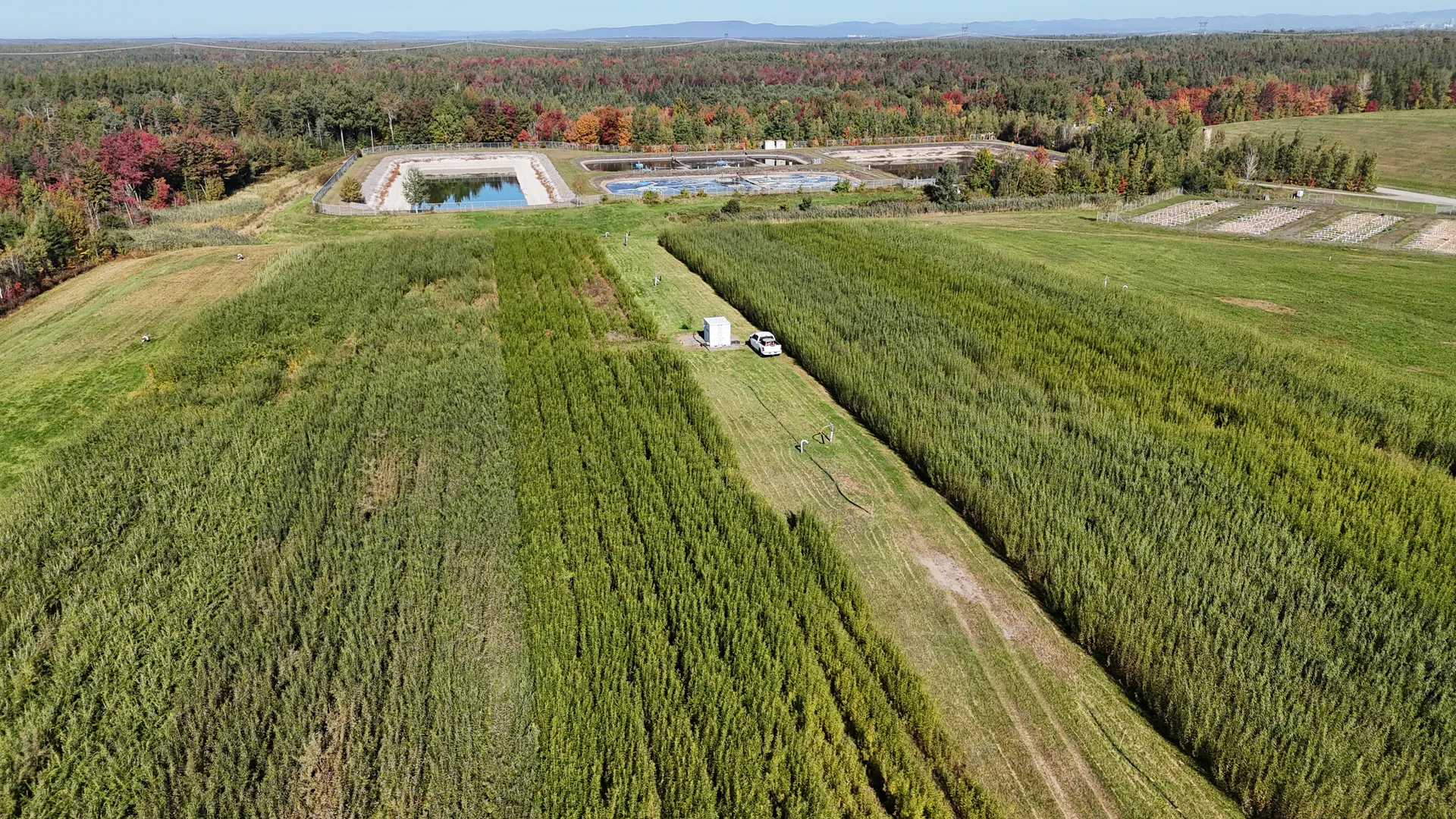
Ramo installed an Evaplant® system on a former landfill cell, over an area of approximately 1.7 hectares.
The system is based on:
- controlled irrigation of partially treated leachate
- distribution into the root zone of the willows
- management of inputs based on water conditions
The planting acts as a no-discharge treatment unit integrated into the existing treatment stream, designed to limit outflows from the site.
Results and performance
Treatment without discharge
- up to ~5,000 m³ of leachate treated without discharge over the first seasons
Environmental performance
- ~117 tonnes of CO₂ equivalent captured
Agronomic performance
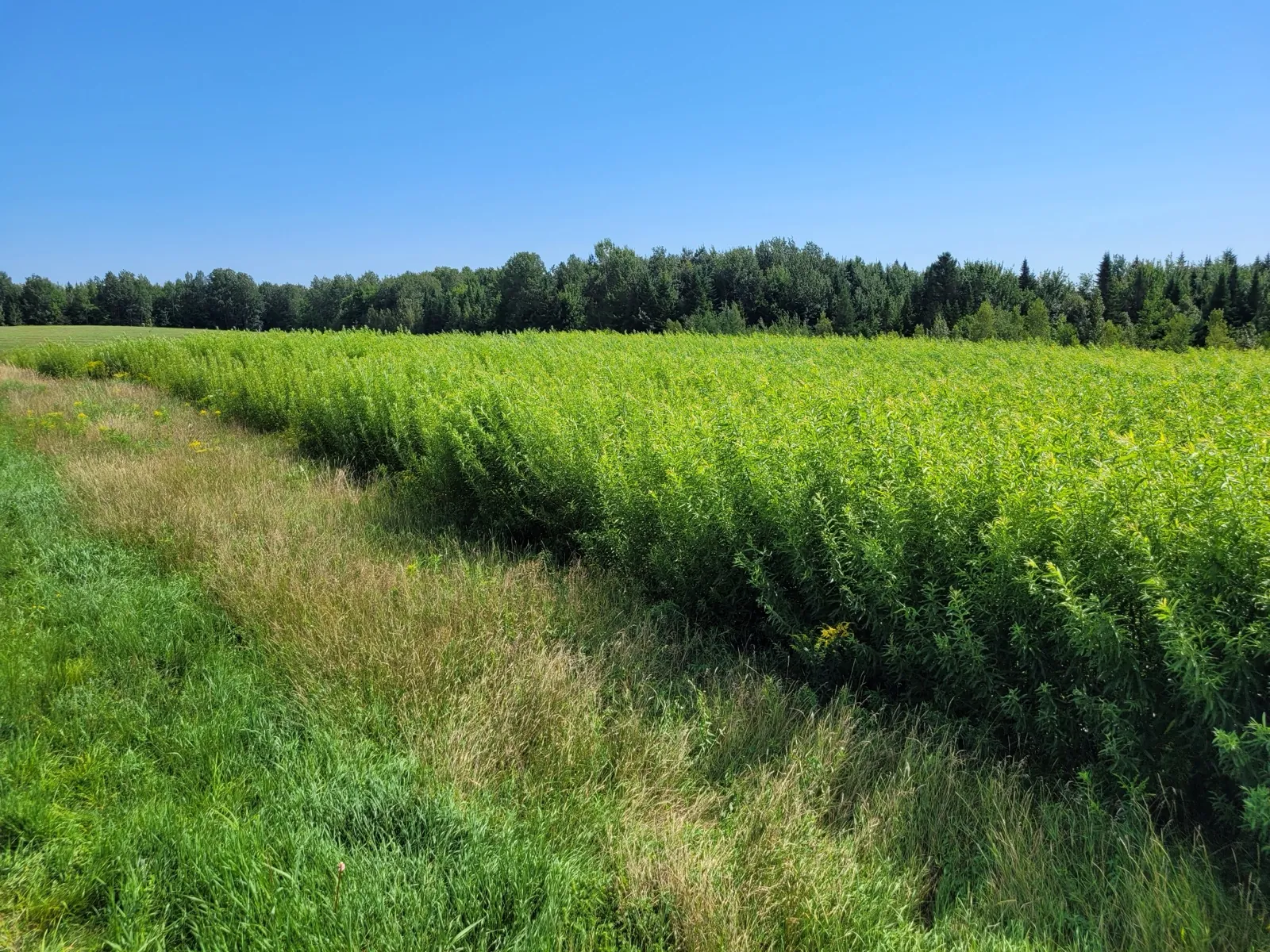
- average yield ~20 t DM/ha·year (≈ 2× higher than a non-irrigated planting)
Monitoring
- no physicochemical degradation of soils
- stable functioning of the root system
- healthy and functional planting
Co-benefits
Valorizing an environmental liability
Using a former cell as active infrastructure.
Water treated without discharge
Volumes treated on site rather than directed to the receiving environment.
On-site PFAS containment
Reduced water flows, limiting the transfer of persistent contaminants to the receiving environments.
Ongoing research projects
Contributing to advancing knowledge of the behaviour of per- and polyfluoroalkyl substances (PFAS) in Evaplant® systems.
High social-acceptance project
Visible transformation and greening of the site.
Mobilizing project
Direct integration into the operations of the engineered landfill (LET).
A similar challenge?
Contact us.
Our team is available to discuss your needs and recommend the right solution.