
Context
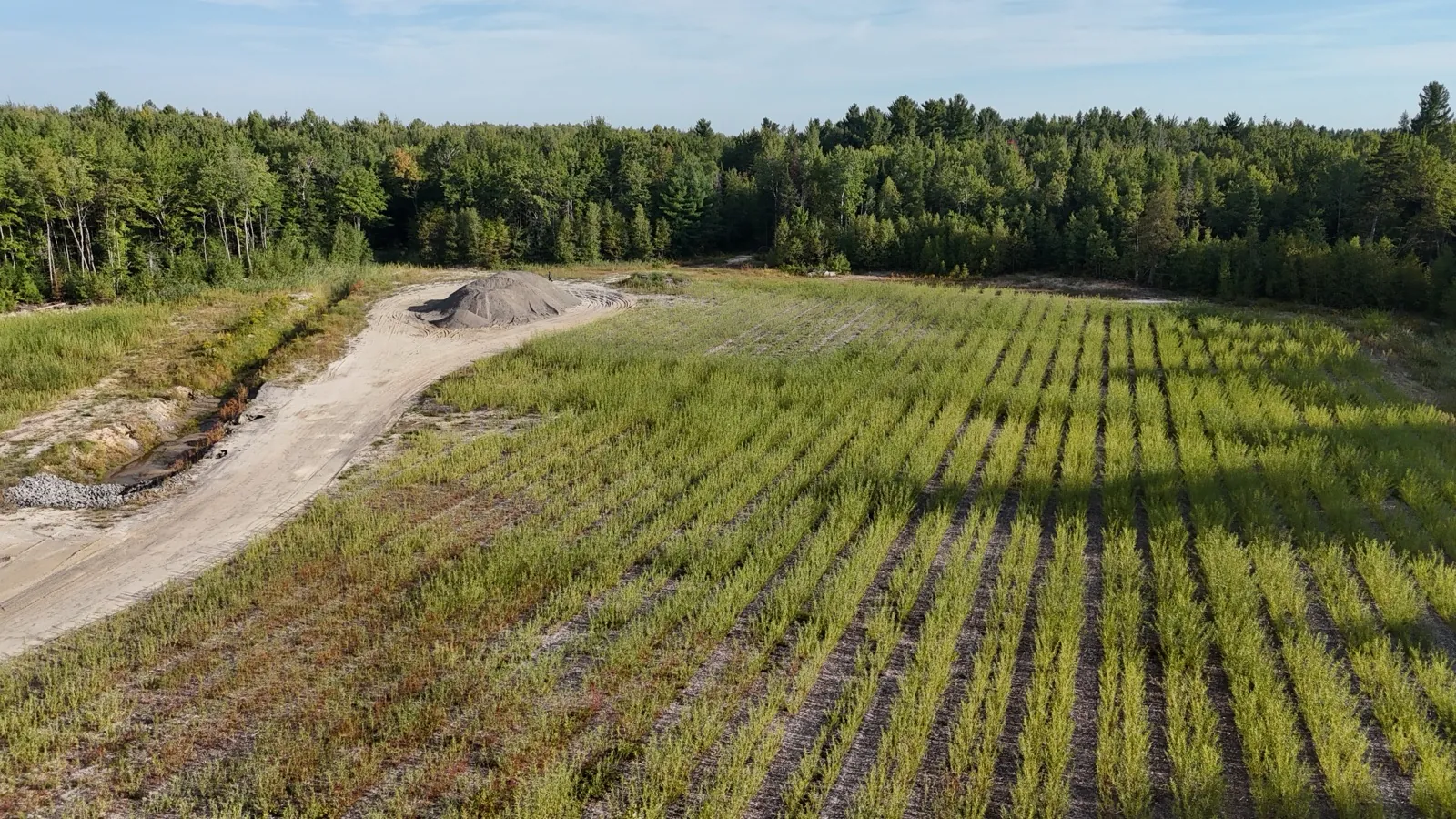
A historically degraded section of a sand quarry acquired by Sable Villeneuve following the end of its operation, spanning roughly 34 hectares. At the time of purchase, the soil there was heavily disturbed:
- low organic matter content
- unstable structure
- presence of invasive species
The project has a twofold objective: to begin rehabilitating this site degraded by past extraction and to progressively restore the biophysical functions of the soil.
The solution implemented
Ramo implemented a revegetation system combining:
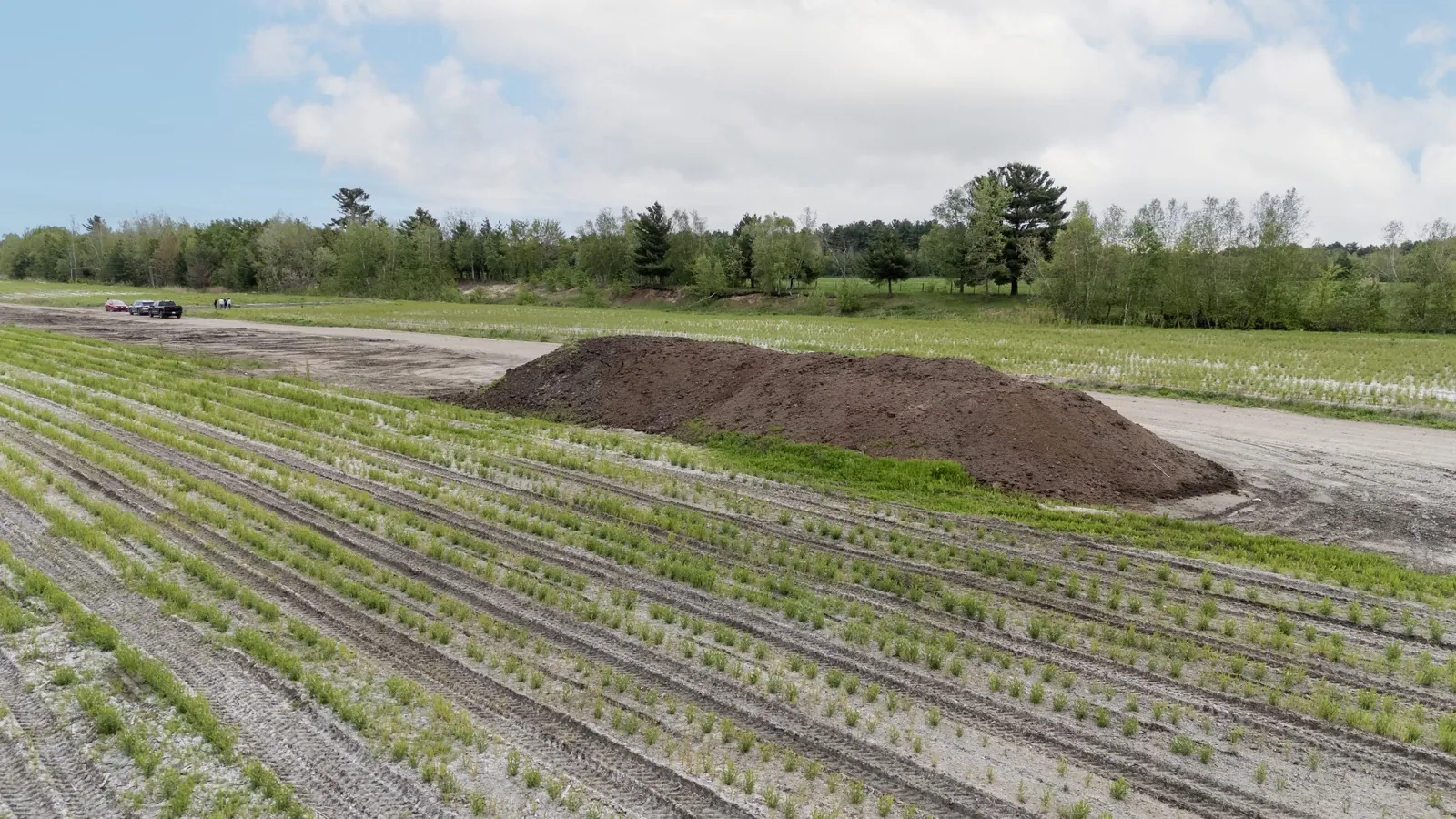
- valorization of fertilizing residuals
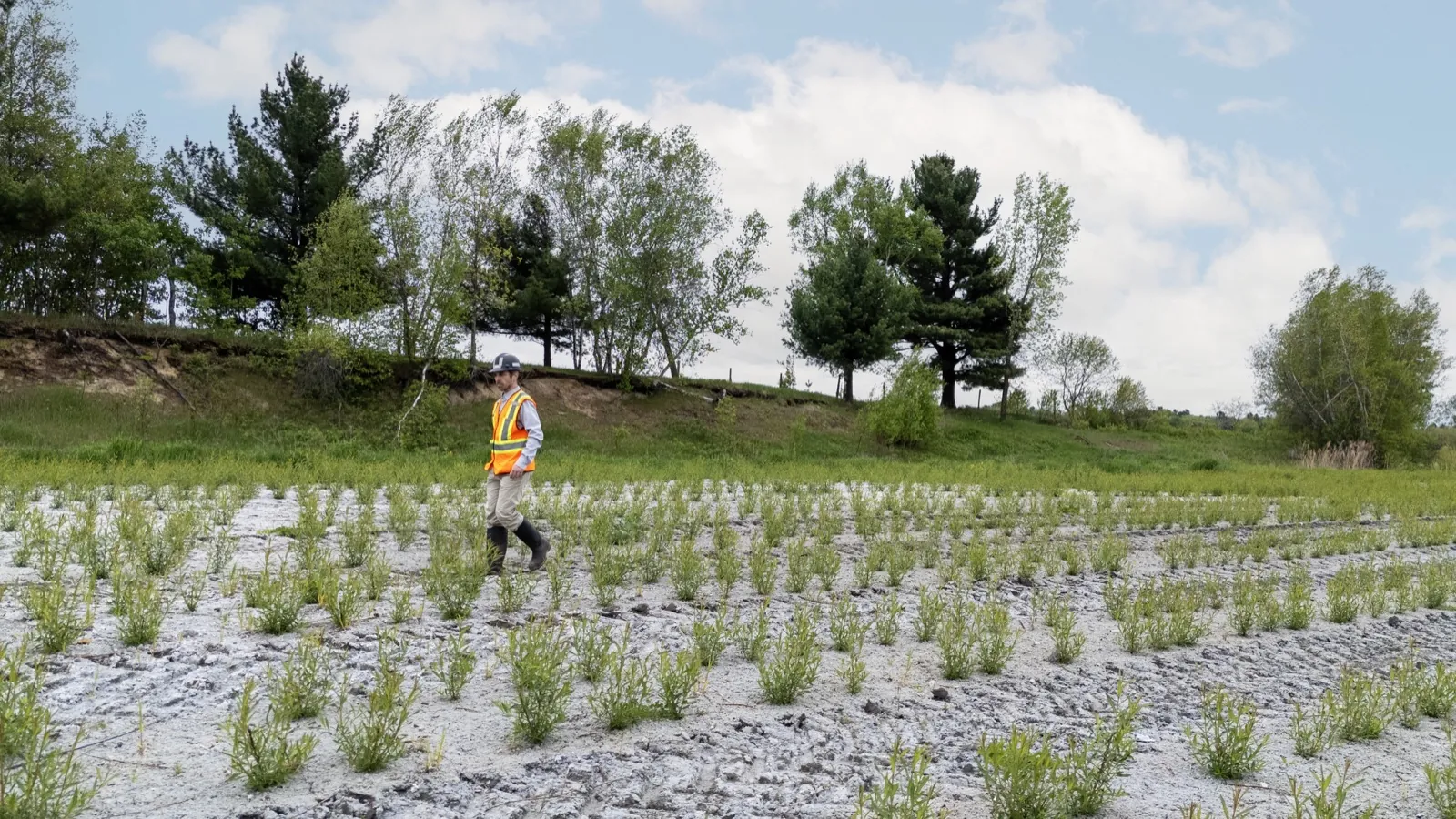
- planting of more than 1,000,000 willows with rapid growth
Willows act as a pioneer species: they quickly stabilize the soils, outcompete invasive species, and gradually build up the profile. The approach is progressive and part of the site's rehabilitation.
Results and performance
- soil stabilization observed as early as the first year
- establishment of a vegetation cover over a large area
- reduction of invasive species
Environmental performance
- ~300 tonnes of CO₂ captured annually
Transition underway toward a functional vegetated system.
Client testimonial
“With Ramo, we didn't just get an innovative concept, but a complete, achievable solution adapted to our land. Their multidisciplinary team turned a complex problem into concrete results, visible on the ground from the very first year.”
Félix Villeneuve (Sable Villeneuve)
Co-benefits
Valorization of fertilizing residuals
Use of fertilizing residuals as an agronomic input.
Progressive rehabilitation
Progressive rehabilitation of a former sand quarry acquired by Sable Villeneuve after extraction activities had ended.
Improvement of soil functions
Increase in organic matter and structural stability.
Circular approach
Future production of valorizable biomass: ramial chipped wood (RCW) and stems.
A similar challenge?
Contact us.
Our team is available to discuss your needs and recommend the right solution.