
Sayona and Ramo join forces to valorize mining waters with Evaplant® technology and the planting of 20,000 willows
A unique technology showcase focused on the circular economy at Sayona's North America Lithium Complex, and the first use of Evaplant® in the mining industry.
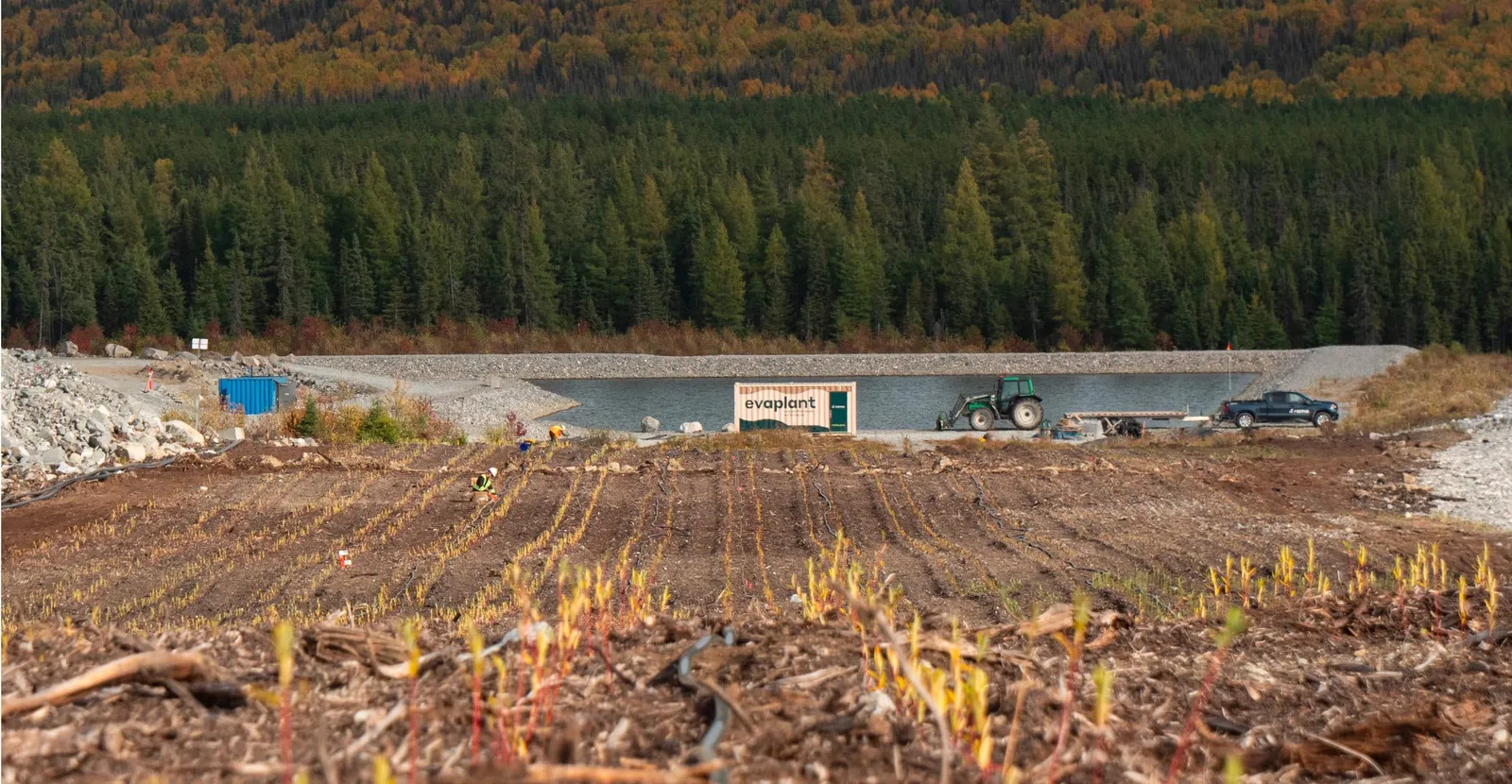
La Corne, January 10, 2024. Québec lithium producer Sayona and the company Ramo are pleased to announce their partnership in a unique technology showcase project focused on the circular economy and sustainable development at the North America Lithium Complex (LAN) site owned by Sayona.
This technology showcase involves using Ramo's Evaplant® technology to valorize and reduce the volume of a portion of the mining waters generated by the LAN Complex. Evaplant® is a zero-liquid-discharge solution that harnesses the high water consumption and transpiration of fast-growing willows to reduce industrial water discharges, valorize the resources contained in this water, and capture atmospheric carbon. This marks the first use of this innovative technology in the mining industry.
The Evaplant® system, which comprises 20,000 fast-growing willows, was installed in the summer of 2023 at the LAN Complex ahead of a start-up in spring 2024. In this first phase, the system will valorize nearly 3,100 cubic metres of mining water and capture 16 tonnes of CO₂ equivalent per year.
The biomass produced by the willows will also play a role in the site's progressive restoration, thereby closing the environmental circular-economy loop: every three years, the system's willows will be harvested as wood chips, then used as organic inputs for the progressive restoration of the LAN Complex.
This collaboration, part of the Towards Sustainable Mining (TSM) initiative of the Mining Association of Canada, is a concrete step to benefit the environment that will allow Sayona to valorize the water used in its operations, while also having a positive impact on its carbon footprint, soil quality, and biodiversity.
The implementation of this project was made possible through the financial support of the ministère de l'Économie, de l'Innovation et de l'Énergie (MEIE) and the backing of the Consortium de recherche et innovations en bioprocédés industriels du Québec (CRIBIQ) under the Soutien aux innovations industrielles pour la transition vers une économie circulaire (SI²TEC) program. Sayona will receive $415,200 in financial support to deliver the project.
"By combining plant engineering with technological engineering, this project reconciles the mining industry's water-management needs, the need for organic matter to maintain environmental quality, and the involvement of local businesses. It's a perfect recipe for harmonious sustainable development, right here in Abitibi-Témiscamingue. Sayona is very proud to be the first Québec mining company to implement this innovative pilot project."
"This partnership between Sayona and Ramo is a compelling example of a net-positive-impact project in the mining industry. By using Evaplant® technology to reduce the liquid discharges of the North America Lithium Complex, we will not only help reduce the site's environmental footprint, but we will also valorize the resources contained in the site's mining waters, capture atmospheric carbon, and contribute to improving regional biodiversity."
"This collaboration between Sayona and Ramo proves that it's possible to combine economy and environment. It's through innovative initiatives like this one that we will produce, here at home, the greenest battery in the world."
About Ramo
Ramo addresses environmental challenges through nature-based solutions. A leader in willow cultivation in North America since 2006, the company offers willow-planting services, wastewater volume reduction, fertilizing residual materials (FRM) management, and the production of wood chips for environmental uses. It is involved in over 1,000 hectares of planting across Quebec, Alberta, and the United States.
Have a question?
Contact us.
Our team is available to discuss your needs and recommend the right solution.