
In Terrebonne, Sable Villeneuve launches an ambitious ecological rehabilitation (a model for the industry)
On a 50-hectare section that has reached the end of operations, Sable Villeneuve launched an ecological rehabilitation project in 2024 in partnership with Ramo. The goal: restore soil health, boost biodiversity and begin the site's transition toward a green vocation.
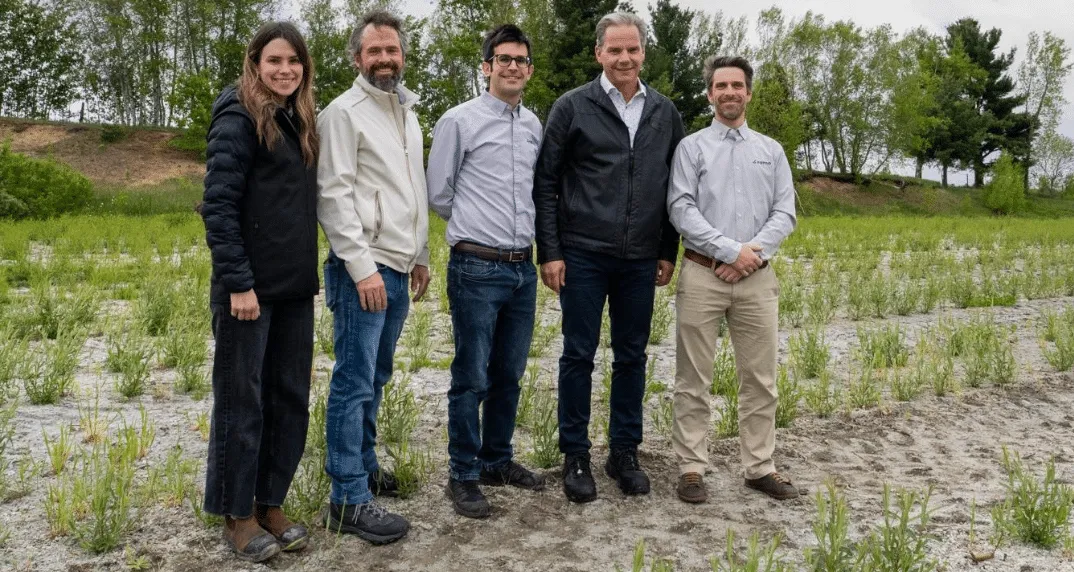
Terrebonne, Quebec, June 3, 2025. On a 50-hectare section that has reached the end of operations, Sable Villeneuve launched an ecological rehabilitation project in 2024 in partnership with the Lanaudière-based company Ramo, which specializes in willow cultivation.
The goal: restore soil health, boost biodiversity and begin the site's transition toward a green vocation, without waiting for operations to end across the entire site.
First steps toward a new landscape
The project began with the valorization of 5,000 tonnes of fertilizing residual materials (FRM), followed by the planting of one million willows, valued for their rapid growth and their structuring role in disturbed environments.
One year later, the vegetation is taking hold: soil stabilization, reduction of invasive species, greening of a degraded area. The project will capture roughly 300 tonnes of CO₂ per year.
« The willows are still young, but you can already see a transformation beginning. »
« Our collaboration with Ramo fits fully within our responsible approach to site rehabilitation, with the clear objective of promoting durable restoration and, where possible, an improvement of the initial biophysical functions. »
An ecological and local loop
Once mature, the willows will be harvested every three years to produce ramial chipped wood (RCW) or turned into stems for noise barriers and fences. The project follows a circular logic: residuals regenerate the soils, the willows grow, then are valorized into eco-products.
Next steps
By 2027, 256,000 trees (maples, oaks) will reforest 20 additional hectares, creating a green buffer zone to improve the quality of life of neighbouring residents.
A model for the industry
While minimum requirements mandate the restoration of worked areas each year before opening new ones, this initiative goes further, generating ecological and social benefits.
Have a question?
Contact us.
Our team is available to discuss your needs and recommend the right solution.