

Revegetation of degraded sites
How does Ramo restore degraded environments using willows?
At Ramo, we use willows as a natural tool for revegetation and ecological restoration. Able to grow quickly in poor soils and northern conditions, willows help stabilize the soil, retain water, and encourage the return of biodiversity.
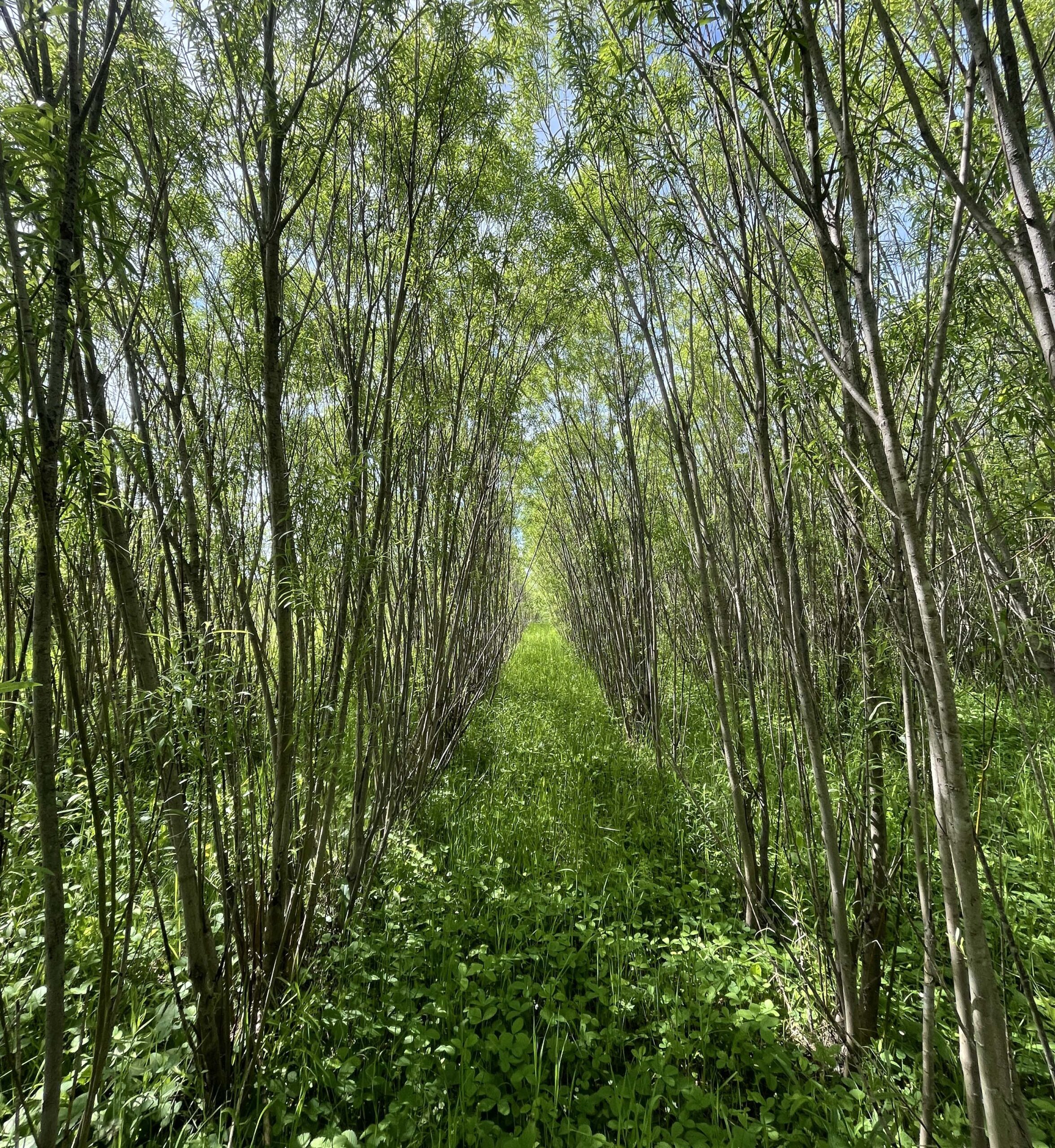
Our projects are carried out in a variety of contexts:
-
Mine site restoration
-
Rehabilitation of sand and gravel pits
-
Revegetation of degraded lands
-
Environmental management projects
-
Vegetative visual barriers (see the Vegetative Barrier page)
We cultivate over 70 native and hybrid willow varieties across 165 hectares, allowing us to select the species best suited to each type of soil and climate. Ramo willows are known for their rapid growth, resilience, and strong carbon sequestration potential.
With our experienced team, specialized equipment, and unique expertise, we carry out turnkey revegetation projects across North America, from ecological design to on-site planting.
Benefits

Field experience
Over 1,000 hectares of degraded sites revegetated and monitored by our teams across North America.

Carbon capture
Willows capture CO₂ from their very first year of growth, actively contributing to the fight against climate change.

Cost-effective solution
Mechanized planting and proven techniques that reduce costs while ensuring lasting results.